
Description
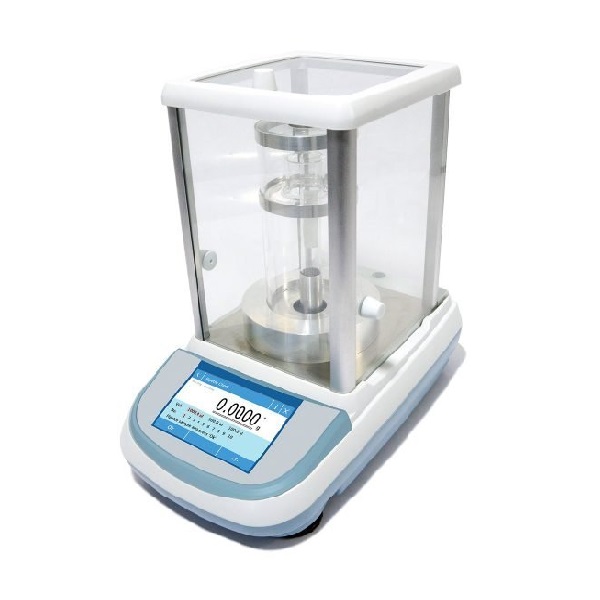
This series of balances is designed for the verification of piston pipettes using the gravimetric method. The embedded “Pipette Check” software allows you to test the correct operation of a pipette by selecting a verification method. At the end, a detailed report is generated with the overall test result (compliant or not-compliant pipette) and the relative partial values.
The -PT models include the evaporation trap that consists of a special weighing container designed to considerably reduce the evaporation of the liquid which occurs naturally during the pipette test procedure. If not well taken into consideration, this effect will negatively affects the tests by increasing the measurement error leading to an incorrect final result, especially in the case of small volumes. The evaporation trap creates a saturated area of water vapor above the test tube containing the liquid coming from the pipette, thus the evaporation of the latter is minimal during the procedure and reliable results can be obtained.
Overview
- 5 inch color touch-screen display (800×480)
- Automatic internal calibration
- Draftshield with 3 sliding doors
- RS232 serial output
- Selectable measuring units
- On-board Software functions: Pipette Check, piece counting, Check weighing, Percentage weighing, Statistics, Animal weighing, Peak hold, Density determination, Recipe, Textile
- GLP protocol
- Internal Database
- Multi language (ITA-ENG-ESP-POR-GER
- Multi-user with password protection
- USB port to import/export data of database
Verifiable pipette types:
- Fixed Volume / Variable Volume
- Air displacement / Positive displacement (reusable) / Positive displacement (disposable)
Verification methods:
- ISO8665
- 4x (100% 10%): 4 samples at 100% and 10% of the nominal volume
- 4x (100%): 4 samples at 100% of the nominal volume
- Custom: number of samples and percentage of the volume of your choice
 |
 |
| Customized control methods can also be defined: the volumes to be checked and the number of samples can be entirely defined by the user. | It is possible to identify whether a pipette needs maintenance or (re)calibration by assessing its performance according to the specifications given by the ISO8665 directive |
Database:
For frequent or many pipette checks at a time, pipette information (model, serial number, pipette type, tip, number of channels, nominal value, …) can be stored in the balance’s internal database for easy recall and greater speed of the control procedure.